How Does Egg Freezing Work? The Process & Survival Rates
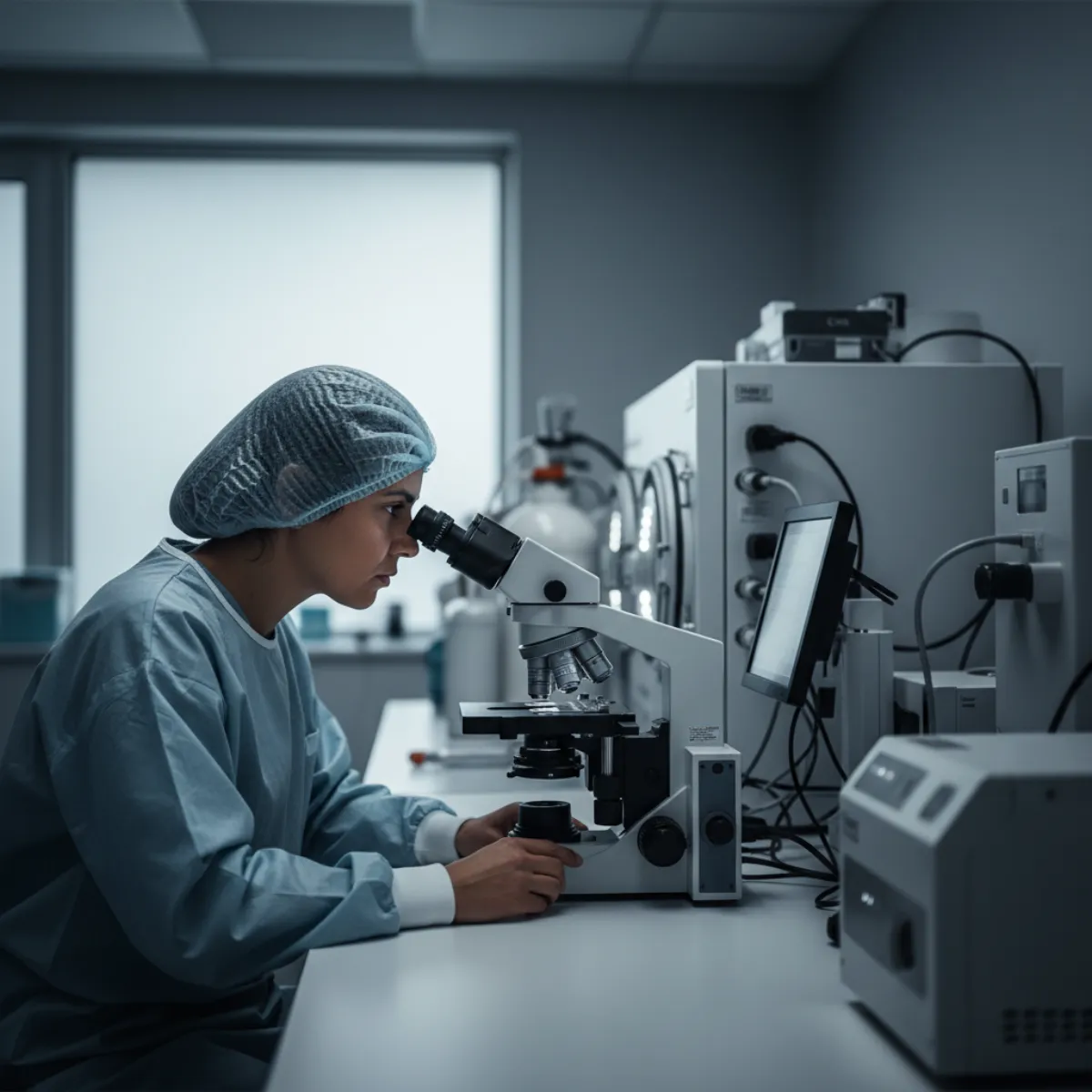
How does egg freezing work?
Egg freezing works by stimulating the ovaries to produce multiple mature eggs, retrieving them surgically, and flash-freezing them using a process called vitrification. When you are ready to attempt pregnancy, the eggs are thawed, fertilized with sperm in a lab, and transferred to the uterus as an embryo.
Elective oocyte cryopreservation, the medical term for egg freezing, is essentially a method of pausing the biological clock for a specific batch of eggs. By extracting eggs and storing them at sub-zero temperatures, you lock in the chromosomal quality of those eggs at the age you are when they are retrieved. However, freezing eggs is not a guarantee of a future child. It is an attempt to improve your future odds, operating as a biological insurance policy that most women ultimately never use.
The reality of egg freezing is that it requires a significant investment of time, physical endurance, and money. In the United States, an all-in single cycle costs between $11,500 and $22,000. This includes $8,000 to $15,000 for the retrieval, monitoring, and freezing process, plus an additional $3,000 to $6,000 for the necessary hormone medications and $500 to $1,000 for the first year of storage. Because older patients often need multiple cycles to reach their target number of eggs, most women undergo about two retrieval cycles, averaging roughly 2.1 cycles.
When you factor in the initial cycles, along with storage fees that run $500 to $1,000 per year, a realistic total banking cost for two cycles and ten years of storage is typically $30,000 to $45,000 or more. Some women choose to travel internationally to reduce this financial burden, saving approximately $5,000 to $10,000. For example, core cycle costs in the Czech Republic are around €1,800 plus medications, while clinics in Spain charge a core fee of about €2,200 plus medications.
Despite this investment, historical data shows that only 10 to 16 percent of women who freeze their eggs ever return to the clinic to use them. The vast majority either conceive naturally without needing their frozen reserve, or their life circumstances and family planning goals change. Yet, the psychological value of having the option remains high. A 2023 study found that only about 9 percent of women who froze their eggs experienced moderate-to-severe regret, compared to roughly 51 percent of women who considered freezing but ultimately decided against it.
The process, step by step
The egg freezing process takes about two weeks. It begins with hormone injections to mature multiple eggs, followed by ultrasound monitoring. A doctor then retrieves the eggs during a brief surgery under sedation. Finally, an embryologist freezes the mature eggs for long-term storage in liquid nitrogen.
The first phase of the process is ovarian stimulation. During a natural menstrual cycle, your body typically matures and releases a single egg. In an egg freezing cycle, you self-administer injectable hormone medications for roughly 10 to 14 days. These hormones stimulate the ovaries to develop multiple follicles simultaneously. Throughout this period, you will visit the clinic frequently for blood tests and transvaginal ultrasounds to monitor the growth of the follicles and adjust medication dosages as needed.
Once the follicles reach an optimal size, you administer a final "trigger shot" to induce the final maturation of the eggs. Exactly 36 hours later, the retrieval takes place. The egg retrieval is a minimally invasive surgical procedure performed under conscious sedation or light anesthesia. The reproductive endocrinologist uses an ultrasound-guided needle, passed through the vaginal wall, to aspirate the fluid from each follicle, collecting the eggs inside.
A typical cycle yields fewer mature eggs than most people expect. The HFEA reports that most patients under 38 have around 7 to 14 eggs collected, and in Cobo's 5,289-patient elective cohort (Human Reproduction, 2018) an average of 9.6 eggs were retrieved and 7.3 vitrified per cycle. Yield varies widely with age and ovarian reserve, and only the mature (MII) eggs are the ones your odds run on. Once retrieved, the eggs are immediately transferred to the embryology laboratory.
In the modern era of fertility preservation, eggs are frozen using a technique called vitrification. Vitrification is a rapid, flash-freezing process that prevents the formation of ice crystals inside the egg. Because the human egg is a single, large cell with a high water content, older slow-freezing methods often resulted in ice crystals that would shatter the egg's delicate internal structures. Vitrification replaces the water inside the cell with a cryoprotectant (essentially a biological antifreeze) before plunging the egg into liquid nitrogen. Under current vitrification standards, overall survival rates are excellent, with eggs showing a 90 to 97 percent survival rate, which is highly comparable to the roughly 95 percent survival rate of frozen embryos.
The survival funnel: why not every egg becomes a baby
Not every frozen egg becomes a baby because each step in the laboratory process involves biological attrition. Eggs must survive the thaw, fertilize successfully, develop into a blastocyst, and be chromosomally normal before they have roughly a 60 percent chance of resulting in a live birth.
When clinics and online calculators provide success estimates, they are mathematically modeling this biological funnel. To understand how egg freezing works, you must understand how many eggs are lost at each stage of the laboratory process. When you return to use your eggs, you will face additional costs: the thaw and in vitro fertilization (IVF) process costs roughly $13,200, and the subsequent frozen embryo transfer costs about $7,200.
The funnel begins with the thaw. With modern vitrification, thaw survival for mature eggs is approximately 95 percent if the eggs were frozen before age 36. If the eggs were frozen at age 36 or older, the survival rate drops to about 85 percent.
Once thawed, the surviving eggs are fertilized using Intracytoplasmic Sperm Injection (ICSI), where a single sperm is injected directly into each egg. Across the board, the fertilization rate is approximately 73 percent. From there, the fertilized eggs must grow in the laboratory for five to six days to reach the blastocyst stage. The rate at which fertilized eggs successfully form blastocysts declines steadily with the age of the woman at the time the eggs were frozen.
| Stage of Process | Expected Success Rate |
|---|---|
| Thaw Survival | ~95% (<36 years old) / ~85% (≥36 years old) |
| Fertilization (ICSI) | ~73% of surviving eggs |
| Blastocyst Formation | Declines steadily with age |
| Euploidy (Chromosomally Normal) | 57.4% (≤35) → ~48.6% (37) → 12.7% (44) |
| Live Birth per Transfer | ~60% per euploid blastocyst |
The most widely cited data for predicting success through this funnel comes from the Goldman et al. 2017 model, published in Human Reproduction 32(4):853. Developed by researchers at Brigham & Women's Hospital and NYU, this counseling model is the engine behind many clinic calculators. It was built from 520 ICSI cycles and approximately 14,500 preimplantation genetic screening (PGS) embryo results.
While the Goldman 2017 model is the industry standard, it is vital to understand its limitations. The model is retrospective; it is built by looking at past IVF cycle data rather than tracking a specific cohort of women who froze their eggs and later returned to thaw them. Because it relies heavily on fresh IVF data to estimate how frozen eggs will perform, the model may overestimate real-world outcomes.
To provide a radically honest assessment, we apply the study's own internal metric: a 19 percent-lower success rate for frozen eggs compared to fresh eggs. When you apply this honesty adjustment, the odds shift significantly. For example, the published Goldman model suggests that a 35-year-old with 20 frozen eggs has a 90 percent chance of at least one live birth. When we apply the 19 percent reduction to account for the reality of frozen-versus-fresh performance, that estimate drops from 90 percent to 73 percent. You can run your own numbers through the model to see how this adjustment impacts your specific scenario.
Please note that all statistical models provide estimates, not promises. It is important to remember that these statistics are population-level estimates, not individual guarantees. Your specific odds depend on your unique medical profile, and medical decisions regarding fertility preservation should always be made in consultation with a reproductive endocrinologist.
What is a euploid embryo, and why does it matter?
A euploid embryo is one that contains the correct number of chromosomes, which is essential for a healthy pregnancy. As women age, the percentage of euploid embryos drops significantly, making it the primary reason why older women need to freeze more eggs to achieve a live birth.
Human cells typically contain 46 chromosomes. When an embryo has exactly 46 chromosomes, it is considered euploid. If an embryo has an incorrect number of chromosomes, a condition known as aneuploidy, it will almost always result in a failed implantation or a miscarriage. The chromosomal integrity of an egg is entirely dependent on the woman's age at the time the egg is frozen, not her age when the embryo is eventually transferred to her uterus.
The Goldman 2017 model clearly illustrates how euploidy rates plummet as a woman ages. For women aged 35 and younger, 57.4 percent of blastocysts are euploid. By age 37, that number drops to approximately 48.6 percent. By age 44, only 12.7 percent of blastocysts are chromosomally normal.
This steep decline in euploidy is the fundamental biological barrier in fertility preservation. It dictates exactly how many eggs you need to freeze. Once you have successfully navigated the entire funnel and obtained a euploid blastocyst, the odds stabilize regardless of your age. Transferring a single euploid blastocyst results in roughly a 60 percent chance of a live birth, though this exact figure varies slightly by clinic protocol.
Some patients debate whether to freeze eggs or fertilize them immediately and freeze embryos. Both options offer similar thaw survival rates, and while embryos have a slightly higher per-unit success rate because they have already survived the fertilization and blastocyst stages of the funnel, freezing eggs preserves your reproductive autonomy. Frozen eggs allow you to maintain flexibility regarding future partners or the choice of a sperm donor, which is why many single women opt for oocyte cryopreservation over embryo banking.
How many frozen eggs make one baby?
The number of frozen eggs required for one baby depends heavily on your age at the time of freezing. A woman under 35 needs roughly 9 to 10 eggs for a 70 to 75 percent chance of a live birth, while a 42-year-old needs about 61 eggs.
Because of the biological funnel and the age-related decline in euploid embryos, there is no universal "magic number" of eggs. Instead, targets are highly stratified by age. If your goal is to achieve roughly a 70 to 75 percent chance of at least one live birth, the required egg yields scale dramatically as you get older.
For women under 35, freezing approximately 9 to 10 mature eggs provides a solid 70 to 75 percent chance of a live birth. For women aged 35 to 37, the target increases to roughly 14 to 20 eggs. For women aged 38 to 40, the requirement jumps to approximately 25 to 30 eggs. In fact, the Goldman model notes that for this age group, 30 eggs equates to roughly a 65 to 75 percent chance of success. By ages 41 to 42, a woman needs to bank between 40 and 61 eggs to secure similar odds.
If you desire more than one child, you must plan accordingly. For two children, you need to roughly double your per-child target. Achieving these numbers often requires multiple retrieval cycles, especially for older patients whose ovaries may only yield a few mature eggs per stimulation. To put the attrition of the funnel into stark perspective: at age 38, the net result of the entire laboratory process is roughly one live birth per 40 eggs frozen. You can read more extensively about how many eggs you'd need based on different family planning goals.
Why age changes the whole funnel
Age changes the entire egg freezing funnel by decreasing both the quantity of eggs retrieved and their chromosomal quality. Women who freeze eggs at 35 or younger have a much higher eventual live birth rate compared to those who wait until they are 40 or older.
While theoretical models like Goldman 2017 are useful for setting targets, real-world corroboration from large cohorts of women who have actually returned to thaw their eggs tells an equally clear story about age. When researchers look at the eventual live birth rates of women who return to use their frozen eggs, the data confirms the steep drop-off after age 35.
For women who froze their eggs at age 35 or younger, the eventual live birth rate upon returning to the clinic is approximately 50 to 60 percent. For those who froze between the ages of 36 and 39, the eventual live birth rate sits at roughly 30 to 40 percent. For women who froze their eggs at age 40 or older, the live birth rate falls to less than 20 percent.
In one large cohort study of women utilizing vitrification, 52 out of 100 women who froze their eggs at 35 or younger eventually had a baby. In stark contrast, only 19 out of 100 women who froze their eggs at 40 or older achieved a live birth. This real-world success by age data highlights why clinics strongly encourage women to freeze eggs earlier rather than later.
The underlying reason for this disparity is visible in the embryology lab. When looking at the yield of euploid embryos created from warmed eggs, women who froze under age 35 see a 20 to 30 percent euploidy rate from their starting egg count. For women who froze between 38 and 42, that figure drops to just 8 to 9 percent.
Despite these declining odds for older women, data from NYU shows that using frozen eggs is still more efficient than attempting fresh IVF for older starters. However, it is crucial to remain radically honest about the limitations of autologous (your own) egg freezing after age 40. For women in their early to mid-forties who are unable to bank the massive number of eggs required to beat the statistical odds, donor eggs serve as the high-odds fallback. Because donor eggs are typically sourced from young women in their twenties, they offer a success rate of about 50 percent or more per transfer, regardless of the recipient's age.
Medical disclaimer: This article is general information, not medical advice, and not a guarantee of any outcome. Success figures are model estimates and cohort averages; your own results depend on your biology and your clinic's laboratory. Always consult a board-certified reproductive endocrinologist before making fertility decisions.